Restaurant Consulting
Brand & Operations & Design
Emerging Restaurant Concepts
You built something people drive across town for. Now you need it to work the same way in a market where nobody knows your name. We align your Brand & Operations & Design so the concept repeats without you standing in the building.
Who this is for
Founders with one to five restaurants who are ready for the next stage. You know your menu, your market, and you fill your dining room. What you don’t have yet is a concept that runs the same way on a Saturday night you’re not there. That’s what we build.
Sound familiar?
None of that means you built the wrong thing. It means you built it the way almost everyone builds the first one, by hand, under pressure, often with your own money. That approach carries a concept to two or three locations. It does not carry it to twenty. You already know you can’t run it this way forever.
The concept works because of you
Your first location may have succeeded partly on local notoriety and party on you working the floor every day. Neither of those scales. You cannot clone yourself, and the next market has never heard of you. Underneath that, three things are pulling in different directions.
You’ve been the brand; you haven’t defined it.
What the concept stands for lives in your head and in the way you personally run the floor. You’ve never written it down, so nobody else can deliver it consistently.
The operation runs on habits.
Nobody has timed the line, mapped the stations, or looked at what the menu costs you in labor. The inefficiencies can be hard to see from inside the operation.
The design doesn’t reinforce either one.
The space was built to open, not to perform. It carries no standards, so every new location becomes a fresh set of decisions.
When the Brand & Operations & Design disagree, it shows up in the numbers. A bank or an investor is going to ask for unit economics you can defend, and right now yours may describe a handful of one-off builds rather than a system.
One or two restaurants can make you a living.
Building a multi-unit brand takes a repeatable system, not more effort.
What you walk away with
We align your Brand & Operations & Design, then hand you a prototype and the standards to repeat it.
The part that isn’t in the scope of work
Two decades in this business means we know who’s good (and who isn’t). We know the attorney who does nothing but restaurant leases. We know which site selection firms are worth the money. We also know the people who buy brands like yours, and they know our work. When you run into something outside our scope, you don’t have to start from scratch. You simply ask us.
Founders who made the jump

Tupelo Honey
Two locations to a national prototype
Tupelo Honey came to us with two restaurants in Asheville, a beloved brunch reputation, and soft dinner numbers that were capping growth. We reworked the positioning and the room together. Sales rose 40%, driven by bar and dinner, and the prototype opened the door to A-level real estate in major markets for expansion.
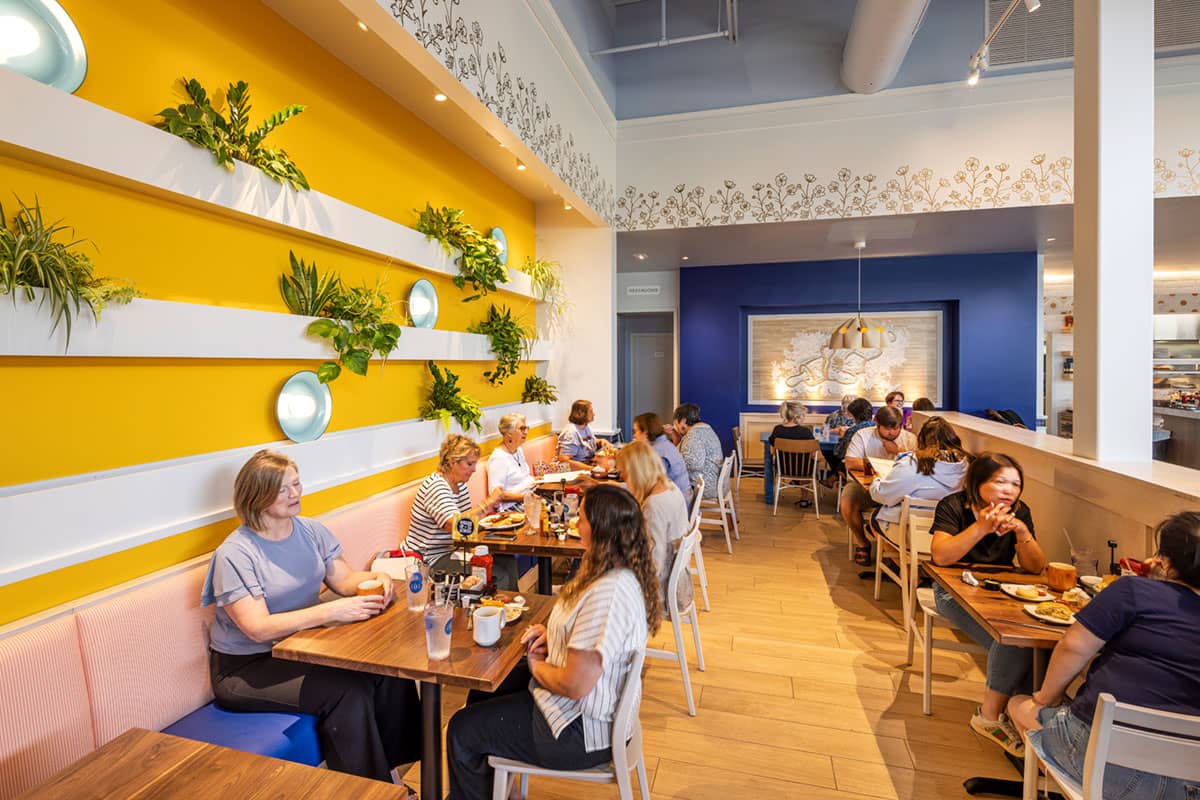
The Buttered Biscuit
33% above projected sales
We engineered the prototype to support $45,000 a week. It opened 33% above projected sales and regularly clears $60,000 without adding labor. That came from doing the brand work before anyone touched the kitchen or floor plan.
brands we’ve grown with





Five disciplines, one team
Frequently Asked Questions
Let’s talk about what’s next for your concept
Tell us where you are and where you want to go.
No pressure, no obligation.