

The Operational Impact of Local Sourcing
Mention the phrase “farm to table” and it conjures up images of white-tablecloth chefs bringing in unusual, high-end agricultural products from artisanal growers. But today, operators in virtually all segments of the industry, including noncommercial, use the essential concept to deliver more healthful and delicious meals to their customers. Here’s a look at how a few operations beyond the white-tablecloth segment bring fresher, higher quality products to their customers, along with some tips from the experts on how to solve the challenges that come with local sourcing.
The original content of this post was featured on Foodservice Equipment and Supplies and written by Tom O'Brien, Contributing Editor. Read the full article here.


How to Grow in the New Economy
One measurement of a restaurant’s success is the return on investment (ROI), which is simply the measure (per period) of the rate of return on the money invested.
In the restaurant world, we’re looking at comparing the total capital expenditure to get the restaurant up and running against the profits that the restaurant generates and the length of time it takes for those profits to cover the initial capital investment.
As long as I’ve been involved in the restaurant industry, that ROI has been targeted at three years. Additionally, the return on capital was always targeted at annual sales equaling three times the capital investment. However, we’re now seeing conditions that are challenging those norms of the past. On a macro scale, construction costs are rapidly increasing at a rate never before seen in my lifetime, while industry profits are rising at a slower rate. It seems that what has worked in the past may not work in the future.
So how can a restaurant owner prepare their business for success? Through focusing on two key factors. First, an emphasis on building relationships in order to leverage effective growth. Second, on creating the extraordinary. Good enough is no longer good enough to compete, and restaurants need to find ways to distinguish themselves in order to reach their goals. By forming relationships on the development side, operators can significantly lower their construction costs. Additionally, by creating a brand that focuses on building relationships with people, operators can also develop a substantial customer base.
Understanding the Oppositions
On the left side of the scale we have capital expenditures, made up of development and initial operating capital. On the opposing side is net income, determined by the average unit volume (AUV) minus the expenses. The goal for most restaurateurs is to have the AUV equal to three times the development capital, while the overall capital expenditure should be three times the net income, resulting in a three-year ROI.
Today, it has become hard to find good sub-contractors to bid on projects, and development costs keep going up. With fewer qualified subcontractors available per project, the supply is simply lower than demand. Due to this imbalance, overall development expenses are rapidly increasing.
On the other side of the equation, the average unit volume is increasing slowly in comparison. The current wage index isn’t going up as fast as the cost of the living index, leaving less discretionary income for consumer spending. This results in more competition for that portion of salaries. Individual concepts and certain industries may increase, but spending as a whole is not as high as it was in the past. Therefore, due to these macroeconomic trends taking place, it’s becoming harder to capture the same ratio of consumer spending. Although the restaurant industry is outperforming general spending, sales are still increasing at a slower rate than pre-recession.
Finally, expenses on the right side of the equation are also increasing. The large push to increase wages leads to higher labor costs for the restaurant. Additionally, trend-driven food sourcing is leading to a rise in food costs. For example, supplying ingredients that are organic, non-GMO and local can significantly drive up the price of food. And with expenses rising at a faster rate than the average unit volume, the overall net income on the right side of the equation is decreasing.
So where does this leave restaurateurs? The big picture is that it’s harder to get the net income to reach the target because capital expenditure is increasing while net income is decreasing. This means that restaurant owners need to think outside the box in order to achieve success.
Changing your approach
In the past, importance was placed on controlling construction costs and brand building as these two practices kept both sides in balance. However, in today’s market restaurateurs need to focus on building balanced relationships overall to leverage growth.
Construction costs were previously managed by competitive bidding and commoditization. Today, it’s important to determine your priorities and develop a relationship with a general contractor based on cost, quality and speed. You then need to treat the GC as a trusted advisor or partner, rather than a commodity. If you leverage your relationship with them, and they in turn leverage their relationship with the subcontractors, you will find that you land on the best price.
On the other side, consumers have drifted away from being brand driven, and are becoming increasingly values driven. In addition to focusing on building a brand, you should concentrate on connecting it with people. For example, using social media to create a strong presence can allow customers to feel more connected with the store. Diners are drawn to restaurants that share their values - which means anything from food sourcing to their impact on the community. Brand loyalty has been replaced by values loyalty.
The old-fashioned philosophy of “build it and they will come” no longer seems to stand true. Instead you need to know your customers and what drives them, and then deliver it. In the past, good worked. However, good enough simply isn’t good enough anymore. People are looking for extraordinary. This is a different way of doing business than what’s been done for years – yet these changes are necessary to make the economic equation work.
Featured in Modern Restaurant Magazine.

Technology: A brand-driver or necessary evil?
Mobile and online services are a staple in today's world. Technology can improve the customer experience, as well as increase an operation's efficiency. Allowing your guests to view menus, place orders and read nutritional information while at home or on-the-go is paramount. But just because we can, should we always use digital technology? Is that what customers want? I'm a strong advocate for using technology to impact the customer experience and communicate the concept's brand messaging. However, I also believe that technology for the sake of technology is a waste of money.
Many establishments view technology as a necessary evil. It's something they need in order to maximize their throughput or maintain efficiencies. In essence, they need to spend money on technology just to make money. However, they're not using it to affect the customer experience.
If you're going to utilize technology in your operation, you can't do it halfway. You either need to ensure that it always works and make a commitment to use it as a brand touch point, or decide if you really need it at all. Technology should be used to meet or exceed the customer expectations. Otherwise it can be anything from unnecessary to plainly detrimental to your brand.
Mobile banking
Think back on your experiences with mobile banking and ATMs over the past year. How many times did you run into problems? Chances are, you didn't have many. I can't believe I'm saying the restaurant industry should learn from banking — but those systems have been intentionally designed to provide a seamless customer experience without glitches. Now compare that to placing online orders or navigating a restaurant's website. These online platforms can be inefficient and don't always function properly. The difference is typically clear; banks have been able to master the digital world of their business, where the restaurant industry is often lacking.
Why does this disconnect occur? The answer lies in the organization's perspective and approach. Banks recognize that digital technology is the primary brand touchpoint for the majority of their customers. Mobile banking often defines a person's connection and experience with the bank. It's no longer just an extension of their business — it is their business. On the other hand, restaurants don't often view online services as a true brand touchpoint. However, this perception is changing throughout the industry because these are the experiences that customers remember, especially Millennials. So, if you're going to offer these mobile and online options, they need to work and properly communicate your brand message. In our mobile-heavy world, you want everything to reflect a consistent brand message. If used efficiently, they can improve brand value.
Menu boards
Digital signage and menu boards are another way that restaurants are incorporating technology into their spaces. These can be useful for concepts that change their offerings frequently, either through different seasons or over multiple day parts. However, it's important to remember the basics of good menu-board design when switching to digital alternatives. Just because it's new technology doesn't mean you can abandon the tried-and-true principles of legibility, perception and how to hold a person's attention long enough for them to easily scan the menu and cull it down to two or three options.
The idea of a menu board is to communicate information and make the transaction process more efficient. If digital technology enables you to do this, then it can be a great tool in your space. However, when changing slides and scrolling images are introduced, the diner can struggle to understand the offerings. Don't let the innovation of digital menu boards become a distraction. Technology should be used to improve the customer experience — not take away from your operation.
POS systems
Interactive digital POS screens scan provide your employees with important information and improve order accuracy. Technology allows you to master ordering times and throughput better than its paper alternative. Tickets will stay in the queue until they are completed, and the technology can change the order status based on target delivery times. Many concepts have this feature, but they aren't using it to its full potential. If a customer's order enters the red zone and they have been waiting for an extended amount of time, simply doing something about it resonates with the guests and makes an impact. For example, one quick serve concept uses this technology to deliver exceptional customer service. When an order goes red, a notification is sent to the manager, who then personally apologizes and compensates the customer for their wait. This is using the technology to truly make a difference.
Relevant messaging
Finally, entering the digital world provides a huge opportunity for restaurateurs to track information about their guest's purchasing habits. You can now use loyalty programs, purchase information, online orders or mobile app profiles to gather information. From there, you can provide customers with offers and information based on what they are actually interested in. However, restaurants just aren't doing this.
For example, I'm an avid coffee lover. I like good quality coffee and I like it black. I’ve been visiting a coffee chain on a weekly basis for years, and approximately 90 percent of my purchases have been their reserve coffees. Ever since I downloaded their mobile app, I've been getting notifications — for specials on lattes and music downloads! I've never even tried a latte, and my 12-year-old daughter knows more about my iTunes music collection than I do. Yet I continue to receive, and subsequently delete, these notifications, which are no more than a nuisance. However, if they were to send me information or specials on their fair-trade coffee from Costa Rica, I would make another trip to their store that day!
Overall, if you're going to use technology in your restaurant, you need to be relevant and ensure the technology and brand messaging is on point. Only then can you truly improve your customer experience and make it count.
Featured on Fast Casual.

Construction costs on the rise: How to mitigate the risk
It’s an unavoidable fact: Construction costs have steadily been on the rise. And with fewer qualified subcontractors available per project, the supply is simply lower than demand. During the recession, subs in particular got hit hard. And those that made it through often did so by keeping their key people employed and working, even without making the profits they wanted. Now that the market has changed and demand has significantly increased, subs don’t want to just keep busy – they want to drive profits to make up for the money lost during the recession.
At first glance, this may seem like a typical story of supply and demand. However, the current construction climate, especially in the fast casual restaurant world, is very different than even in the pre-recession boom. In past growth cycles, contractors simply staffed-up to handle the increased demand. Now, if subcontractors aren’t able to find good people, they become more selective in the work they accept. So where does that leave restaurant operators?
First starters, operators/owners need to determine what they’re looking for in the construction process. This means typically weighing price, quality and speed against each other. After establishing primary and secondary priorities, it’s important to develop a relationship with a general contractor based on those attributes. Next, operators need to treat the general contractor as a trusted adviser or partner, rather than a commodity. If you leverage your relationship with them, and they in turn leverage their relationships with the subcontractors, you will find that you land on the best prices to meet your expectations. However, always remember that in the triad of price, quality and speed, you must focus on two.
This is an enormous paradigm shift. Previously, maximum competition and bidding yielded the lowest cost for restaurateurs. However, general contractors and sub-contractors no longer want to spend their time bidding, when they already have all the work they want. They would rather price out a job to a general contractor that already has the project– someone they know will pay on time, be reasonable with expectations and works well with their team. In this new pattern, when you develop a relationship and minimize competition, you end up minimizing cost.
Build-out methodologies
When a project is completed using a design-bid-build method, the owner hires both the architect and the general contractor. This allows the restaurateur to have control, but it can also lead to the design being over budget.
Using a design-build method can alleviate this problem, as the owner often hires the general contractor, and the GC then hires the architect. However, this often places cost as the number one priority. It can sometimes result in quick construction, but speed is very secondary to cost in this situation. Quality is pushed to the side, and there is very little focus on brand consistency. In today’s market, design-build may be effective at controlling costs, but it sacrifices both quality and consistency in the process. It’s important to note that in the design-build scenario the price is set and the contractors work to lower the costs and increase their own margins, not the owner’s.
A third method, integrated project delivery, is often used on large scale projects like hospitals and universities. In this process, the owner, architect and general contractor all communicate and contract with each other. The owner is responsible for setting the budget from the beginning, while the architect finds ways to creatively and efficiently meet the objectives. Finally, it’s up to the general contractor to implement the objectives in a cost effective way. This set up allows every party to focus on what they do best.
Finding a balance
Since a true IPD method isn’t always plausible for restaurant development because of its relatively smaller scale, we’ve found a modified process to be the most effective approach. The key is increasing collaboration rather than competition. The owner and architect should set the priorities and get a general contractor involved early in the process – ideally during pre-design or schematic phases. Then, the owner should negotiate a contract with the GC that includes the cost of the subcontractors plus the fixed fee for the overhead, which establishes a guaranteed maximum price. If the GC can find better numbers during the final pricing, savings are shared with the team. From there you can collaborate and have the GC price out the project at key milestones with the subcontractors that are already locked in for the work. This limits variables and maximizes the economies of scale when restaurants are looking at opening multiple locations. This way, all of the parties involved can work collaboratively to meet the objectives and lower the costs.
This team approach is very different from the traditional model, but we’ve found that it’s the best way to mitigate the considerable risks in the rise in construction costs and assure a certainty of outcome relative to schedule. It does take time to develop the process, as it can be easier to put all the work on the general contractor. However, when you’re leveraging your relationships in the right way, you will find that the benefits far outweigh the effort and the risks.
Featured on Fast Casual.
Five Packaging Trends for 2016
Sarah Pike, Art Director
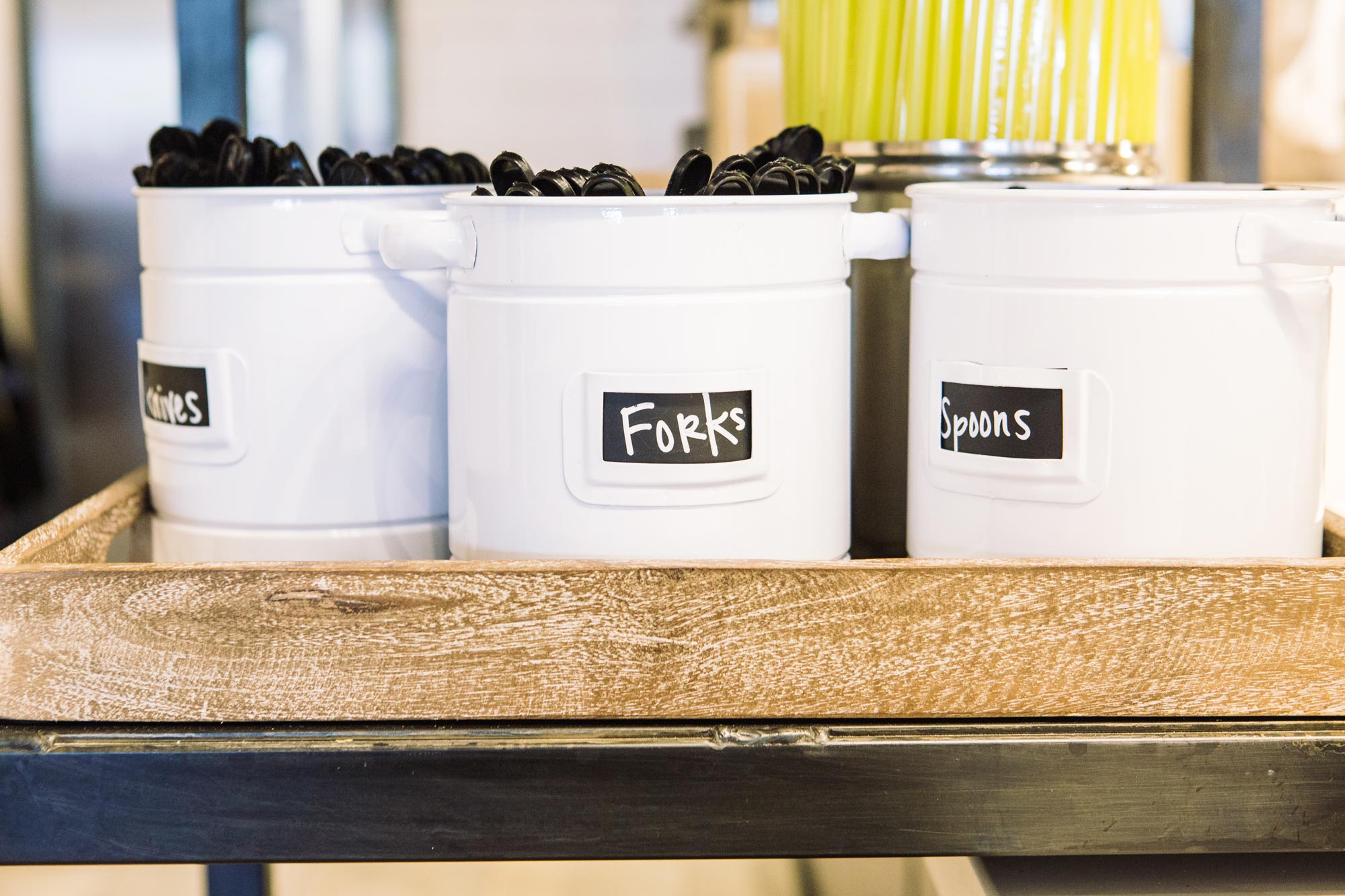
Product packaging can take on a variety of innovative forms designed to resonate with different types of consumers. Today’s trends still rely on the basic function of product delivery, but they have also evolved with the ever-changing buying experience. Whether it makes the merchandise seem personal, handmade, or sustainable, these design features wholeheartedly resonate with consumers who are looking for greater brand engagement through product packaging.
When setting out to create or recreate your own brand packaging materials, the most critical detail is consistency. Every piece should relate to the group, and each should communicate the story of your brand values.
The following top packaging trends can be implemented throughout any part of your brand experience.
1. Personalization
Packaging that provides an area for personalization is one of the newest and most engaging trends in the industry. Coca-Cola has already played with this idea through its pre-named cans. We’ll continue to see this concept carry over to in-store interactions and packaging. Food products may feature “hand sealed” or “use by” labels to show that the ingredients are fresh and may be part of a small batch. In restaurants, to-go items could leave a space for writing in, “made fresh for.” Allowing space for human personalization encourages direct interaction, creating a stronger tie between customers and the brand. Personalization allows brands to better connect with consumers on both an emotional and intellectual level.
2. Artisan
Packaging with a handcrafted look is an increasingly popular trend. Labels will often use handwritten-style fonts, sketch lines, and watercolor to depict the artisan nature of the products. A hand-illustrated look resonates with customers by drawing attention to the handcrafted and creative qualities that went into each piece. Items featuring these elements are not necessarily made by hand, but brands that utilize this packaging style are often looking to give off a strong non-corporate feel.
3. Reusable
Packaging that has been specifically engineered for reuse is an innovative trend that lends itself to both originality and sustainability. Brands want to share their dedication to earth-friendly practices: Jammies is a brand that packages children’s clothes in a reusable jar; the box from Aquilegia wine can be repurposed into a wine rack; and Conto Figueira sells men’s shirts in a reusable wooden box with a glass lid. The idea behind reusable packaging supports the movement to be more green and responsible. It not only resonates with customers who want to invest in brands that are bettering the planet, but it also encourages customers to be marketing agents as they reuse packaging that promotes the brand.
4. Keep It Simple
Simply designed packaging features lighter font weights and minimal color palettes. This less-is-more approach limits confusion and creates an overall classic design that allows the product to truly stand out. Luxury brands have adopted this style, and it resonates with consumers looking for clear, clean, and defined merchandise.
5. Vintage
Vintage packaging trends feature labels with subtle patterns that are reminiscent of previous days. They often use badges or patches in the design to recreate a distinct look. The containers may resemble traditional packaging through old-school forms, such as medicinal bottles. This style appeals to consumers who may be eclectic, antique lovers. It also introduces a unique, limited-edition sense to the product.
Any one of these packaging trends can easily be integrated into a restaurant's overall business strategy. By doing so, brands can enhance their ability to further engage with customers and ultimately build brand loyalty.
Featured in QSR.

How to use your restaurant design to tell your 'real food story'
Intentional food sourcing has been a significant trend in the restaurant industry for the past several years. As menu ingredient origins grew in importance to consumers, restaurateurs began to pay more attention to where their food was coming from, as well as the natural health benefits of fresh meals. Hormone-free, GMO-free and all-natural have become commonplace terms — simply because customers demand it. We see it throughout the industry: quick casual restaurants now feature free range chicken, fast food establishments are boasting all natural beef, and even grocery stores stock naturally sweetened products. These classifications now have widely accepted perceptions, while a negative connotation surrounding synthetic and processed foods has gone mainstream.
Responsible food sourcing is becoming the baseline. So now, it’s important to look ahead at how these trends may evolve. I believe that over the next couple of years we will see a distinct shift in focus. Consumers won’t solely be concerned with where their food comes from but also how it is being prepared. Quality isn’t just about using real ingredients; it's also about how we’re cooking them. Significant advances in specialty cooking and holding equipment and multi-modal technology have made this even more of a focus. Diners will lean more toward cooked-to-order meals, which gives them the opportunity to alter the dish for dietary needs and flavor preferences. No matter how good the establishment is with their cook and hold process, the more educated a diner becomes, the more they will look for food being prepared when the order is placed.
Celebrating your story
If you’re currently using cooked-to-order processes in your restaurant, it’s important to celebrate it. There are numerous ways to highlight this through restaurant layout and design. Featuring an expo kitchen allows diners to see your operation clearly and being transparent establishes a high level of trust between you and your guests. People won’t care if things aren’t spotless and gleaming – they understand that it is what it is. Instead, they’re interested in viewing the food being cooked there. They want to see what’s taking place on site – and have the opportunity to watch their personal meal take form.
Incorporating your use of real ingredients and cooking processes into your design is vital. These are part of your story – and developing a way to tell that story is important. What makes you unique? It could be your history, recipes, food origin, cooking processes, etc. Today’s customers are interested in these aspects. They want to know how, and more importantly, why your business runs. Whether you’re integrating it through graphics, signage, taglines or even materials and textures – it all paints a picture of who you are as a brand. And that is what will resonate with your guests.
To make a cooking process a key part of your brand takes a significant commitment. It doesn’t end at telling the story. Although the graphics and interiors are a vital piece of the messaging, they can only set the expectation. Your operation then needs to deliver on the intended experience, which at times can be complicated to execute. In order to leave an impression, accuracy is key. The meals should be prepared both quickly and correctly.
Other factors will be impacted by your change in the cooking process. Preparing cooked-to-order meals will limit the number of menu choices you can offer, due to a more intense labor process. Moving in this direction can also cost more, as well as limit the throughput. So it’s important to decide if you would rather have quality food at a lower cost, or quality cooked-to-order food that resonates with your customers. However, if it is a key part of your brand, it’s important to stay true to your values and execute it flawlessly. Going this extra mile is something that makes you both memorable and remarkable.
Featured in Fast Casual magazine.

Update: RedEye Diner is coming to the Epicentre to feed you
As a reminder, the people behind Midnight Diner in South End have decided to open a new location in the EpiCentre (in the old La Tagliatella spot next to Mortimer’s) and are calling it RedEye Diner. Perfect.
Eddie South, the current GM of Midnight Diner, will be promoted to president of operations; Chef Lee, who crafted the Midnight Diner, will be in charge of the menu at RedEye.
Mimi Williams of Starr Design told us, “We were looking to feed off the energy and excitement of the EpiCentre, while creating a distinct and relevant space. We began by thinking about what customers would truly want out of an uptown diner – and used that to intentionally design a restaurant that people can truly connect with.”
The original content of this post was featured on Charlotte Agenda and written by Jason Thomas. Read the full article here.

Trend: Incorporating Fire in Design
“Everyone is drawn to fire,” says Tim Byres, the executive chef and partner of Smoke in Plano, Texas. “Everyone has memories of fire, so there’s a nostalgia element to it.”
There’s always been fire in pizza and barbecue restaurants, but now more chefs realize the value in this most elemental of cooking methods and see it in experimental as well as tried-and-true ways. “In the last two to three years, we’ve seen an emergence of people focusing on food sourcing,” says Steve Starr, owner of Starr Design in Charlotte, N.C. “What we’re seeing now is the next step in sophistication in how food is produced, and fire becomes a critical element in that, especially when there’s an authenticity to it.”
The original content of this post was featured on restaurant development + design and written by Amanda Baltazar, Contributing Editor. Read the full restaurant development + design article here.

Franchising and growth: Expanding into non-traditional spaces
In the restaurant world, it’s vital to remain active and growing. Without an ongoing corporate culture focused on expansion, you’ll quickly get outpaced. But as restaurants expand, executives are forced to address the problem of limited A-list real estate options. This means operators will continue to enter non-restaurant ready or non-traditional spaces as a way to increase brand awareness.
When entering into non-traditional restaurant formats like food courts, universities & airports, re-developing a concept to fit these new operational structures is no easy task, although it can be done and with great success. Here is what operators should keep in mind in order to master and succeed in non-traditional formats.
1. Make the necessary operational and service model changes.
In a traditional format, you typically have a complete and discreet operation dedicated just to your concept. Everything you need is in your space. While you may have a separate servery and cookline in a non-traditional format, other operational processes can be allocated to shared space. These can range from coolers and storage, to prep facilities and ware-washing. Other operational changes may also be required based on the new format. For example, stores that traditionally have food runners or wait staff may eliminate that position altogether, as customers often pick up their food from the window or counter.
Restaurant operators should come up with a separate established playbook for these non-traditional locations. It’s typical for each new location to require its own operations manual so the owners can maintain operational control and consistency from one location to another.Keep in mind these non-traditional formats may also create unique franchise relationships because they are often run through contract service providers rather than individual franchisees. This can lead to added complexities and opportunities, so give these agreements and locations more thought and planning on the front end.
2. Maximize your opportunities for clear brand expression.
This is big from a design standpoint because your brand communications will be based on the size and format of the available non-traditional space and may well be subject to the overall facility’s design requirements. While this is a more subtle change than the operational ones, it is an important one. What you choose to communicate will affect your overall brand equity and awareness so make sure toselect the most important messaging points tied to your brand. In a non-traditional space, your guests are only exposed to a snippet of your intended customer experience. Not only are there fewer direct interactions with diners, there is significantly less square footage in the space. So make sure what you say, and where, has significant impact. Brand expressions should be evident in the materials and forms you choose you’re your counters and transactions spaces as well as on point-of-purchase signage, menus and menu boards. Where and how you position your marketing collateral should be clearly laid out in the beginning, so every moment in the space is intentionally designed.
Featured on Fast Casual.
How to build a multi-sensory experience in the retail environment
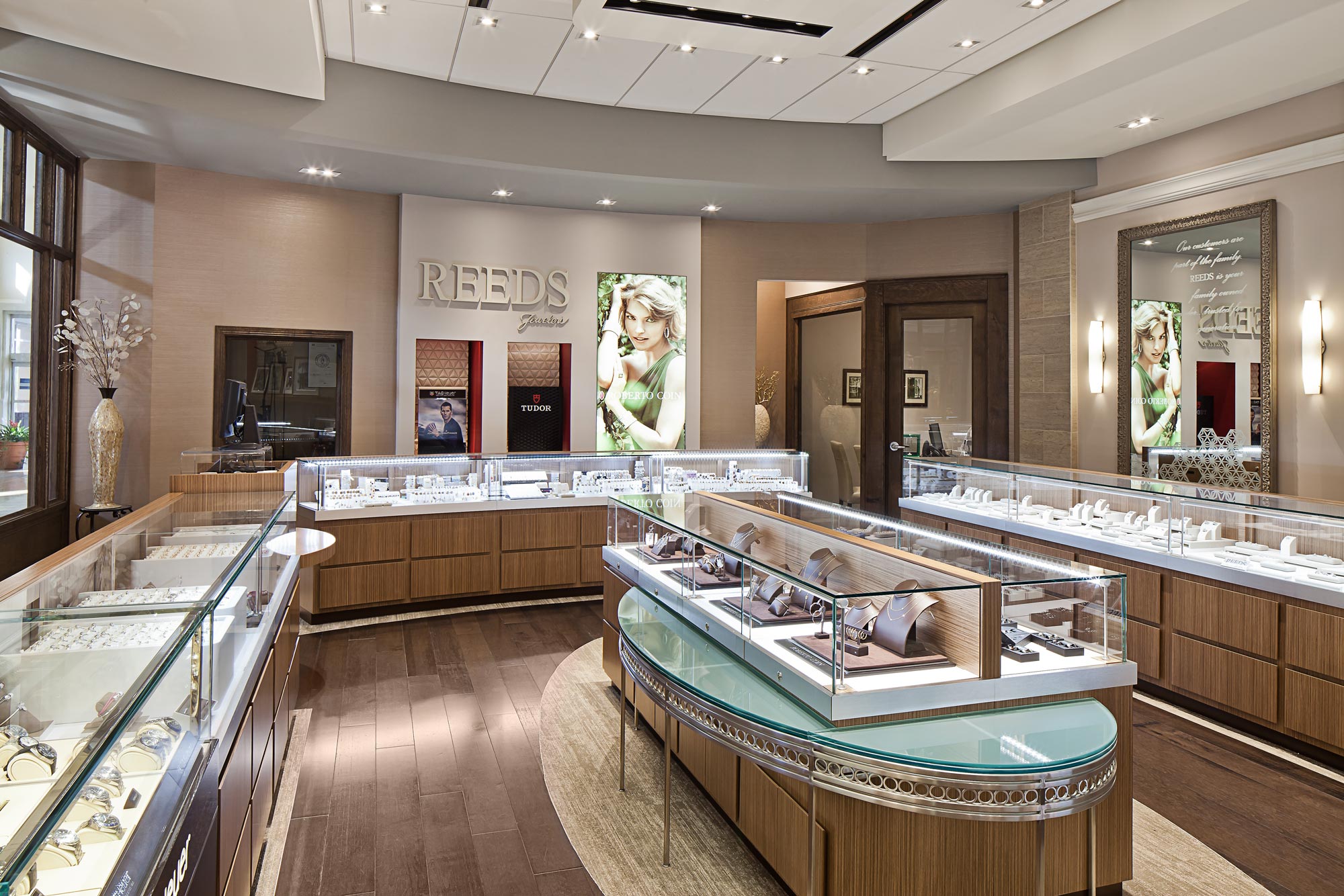
It takes a lot of work for retail brands to deliver a remarkable experience. It can be done, however, by making sure the environment touches each of the five senses.
A sensory experience affects a human’s senses: sound, sight, touch, smell and taste. Retailers often naturally focus on sight, primarily caring about how the space. But what they don’t realize is that the look and feel of the environment encompasses a lot more than simply how it appears.
In order to create a distinct and intentional sensory experience for guests, pay special attention to the feel of the space and appeal to their senses of sound, smell and touch. Since retail operators are often serving customers with diverse motivational drivers and backgrounds, it’s important to hit on enough factors to create a remarkable experience.
Sound
Different retailers function best under different noise conditions. You need to decide up front what you’re looking to establish in the space. Are you creating a festive, social vibe, or are you going for a quiet and calm setting? It all comes down to brand messaging. Once you’ve decided on your goal, you can use an intentional combination of specific music along with specific material selection focused on acoustic control.
Smell
Scents can be established in a variety of ways. Using the pressurization associated with your HVAC system and the hood exhaust system, you can control the smell within your retail space.
Touch
There are two ways customers can experience the sense of touch: literally and figuratively. A person can physically touch different finishes in a retail environment based on surfaces that feel natural, solid, textured, soft, hard, plush, layered or comfortable. And, the way these textures look can even affect your guests’ “sense” of touch. These literal implications set the tone for the way your store may feel to the customer.
Retail operators typically approach this sense of touch in two different ways. While some go out of their way to define a customer’s personal space, others breakdown the definition of space to make their establishment feel more communal. Additionally, different table styles can impact the way a person feels in the space. How you approach this sense of touch will be determined by the type of environment you are trying to create.
Sensory experiences exist almost everywhere in your retail environment, whether they’re deliberately planned or not. Executing an experience that touches on each sense can be a challenge, but should always be intentional. It's best to break them down into their own experience rather than tackle them all at once. This way, you have a better idea of where you want to go and what you want to accomplish with each.
Featured on Retail Customer Experience.

How to make $1 million in a single year (Advice from 10 Successful people who have actually done it)
A million dollars ain’t what it used to be, but it’s still pretty good money--especially if we’re talking about annual income, as opposed to net worth.
So, how do you get to that milestone? Since I haven’t done it myself (yet), I reached out to a group of people who actually have made at least $1 million a year. (Hint: If you didn’t inherit a fortune, it’s all about entrepreneurship.)
(hint: steve made the list!)
The original content of this post was featured on Inc. and written by Bill Murphy, Jr. Check out the full list and responses here.

Finding your 'Purple Cow:' 3 ways to connect consumers to your brand
A truly noteworthy restaurant is one that captivates people and makes them feel connected to the brand. But with extensive competition in the industry, how can you facilitate this desired connection with your customers?
From our perspective, it starts with the desire to become remarkable. Being remarkable is much more than creating an excellent product and delivering superior service; it’s about designing a space that customers can relate to.
What does it look like to create a remarkable experience? The answer lies within your environment. While the food and service need to be noteworthy, it’s the environment that sets the expectation for what the restaurant delivers. If the products are top notch but the design is underdeveloped it’s still ordinary. You need to create an environment that’s inspired by the target audience, which will inevitably affect them on both an intellectual and emotional level.
This doesn’t mean that every store needs to be on the bleeding edge of trends or crazy expensive to be remarkable. But they do need to connect with people’s emotions. And it’s nearly impossible to create this kind of environment without first putting in the time to identify and subsequently research your target audience. In the end, you’ll be able to create a space that’s relevant, inviting and remarkable.
To turn an idea into a remarkable experience, follow these three steps.
1. Identify your true target customer. Focusing on a well-defined target audience will help you establish clear and consistent objectives for your concept. This doesn’t necessarily mean excluding everyone else. It’s simply about creating a space that reverberates with the people that will have the most influence on your business’ success. There’s something to be said about having a distinct brand. If you aim to appeal to everyone, you run the risk of appearing watered down and ordinary. However, if you specifically design with your target in mind, your peripheral customers will often follow.
2. Research their motivation.In order to best understand your customers, it’s imperative to conduct analytical research to determine what motivates their decisions. This is especially important when deciding what will appeal to your audience. Think to yourself, “Would this attract my target?”To do this, we begin our design process by conducting a set of brand discovery exercises with our clients that combine right brain and left brain thinking. This takes into consideration brand personality as well as strategic positioning. We have found that this intentional approach helps restauranteurs better understand their business, culture and aspirations as well as their target market.
3. Make the experience remarkable. Now that you’ve done the background research, it’s time to touch on emotions. In the book ,"Purple Cow," author Seth Godin explains how even beautiful grazing cows in picturesque pastures no longer remain interesting after you’ve seen enough of them. But stumbling on a purple cow would capture anyone’s attention. Creating a store that causes people to tilt their head in wonder – now that’s something worth going after. Among a sea of ordinary stores (and cows), consumers are looking for places that stand out — something that excites them. It’s vital to create that feeling with your experience.
People tend to view spaces as a unified whole, rather than individual parts. In designing a restaurant, it’s important to recognize that customers often don’t perceive the details unless they’re wrong. If a customer enters a well-designed space that hits their emotions, they may not be able to describe why they like it, but the environment simply feels right. Using lighting, signage, art and graphics to create function as well as feeling can help your customers relax and be at ease to enjoy the experience. By creating a well-choreographed journey through the space with clear visual and messaging hierarchy, customers won’t feel tense or out of place. Add in a few unique and distinct design elements — and your target audience will be raving about their visit. You’ll create your own purple cow — and that’s something truly remarkable.
Featured on FastCasual.