
1 problem, 3 solutions: launching a takeout & delivery system
Getting creative in the restaurant industry doesn’t just put you ahead now. It keeps your restaurant alive. With the restrictions on dine-in services across the globe brought by the COVID-19 pandemic, restaurants are being forced to creatively use resources and rely on takeout and delivery to stay afloat.
Luckily, the art of takeout is something we’ve been studying for years. And yes, it is an art, in both presentation and execution. There are challenges surrounding making sure all parts of an order get delivered, how the food looks, tastes and feels when it arrives to a customer, and food safety. When done poorly, it can be detrimental to a brand’s reputation. When done successfully, the restaurant has a chance to stand out and, most important, can keep customers coming back. One of the keys is an accurate, inexpensive and safe packaging system.
Order Accuracy and Completeness
A messed-up order is a pain for everyone. The unhappy customer will often drive back or call to address the issue. In turn, someone on the other end has to deal with it and figure out how to make it right. While mistakes happen, this is more often the result of a disorganized order assembly and tracking system. To avoid this, we recommend utilizing a kitchen display system (KDS), one to two thermal printers and branded labeling.
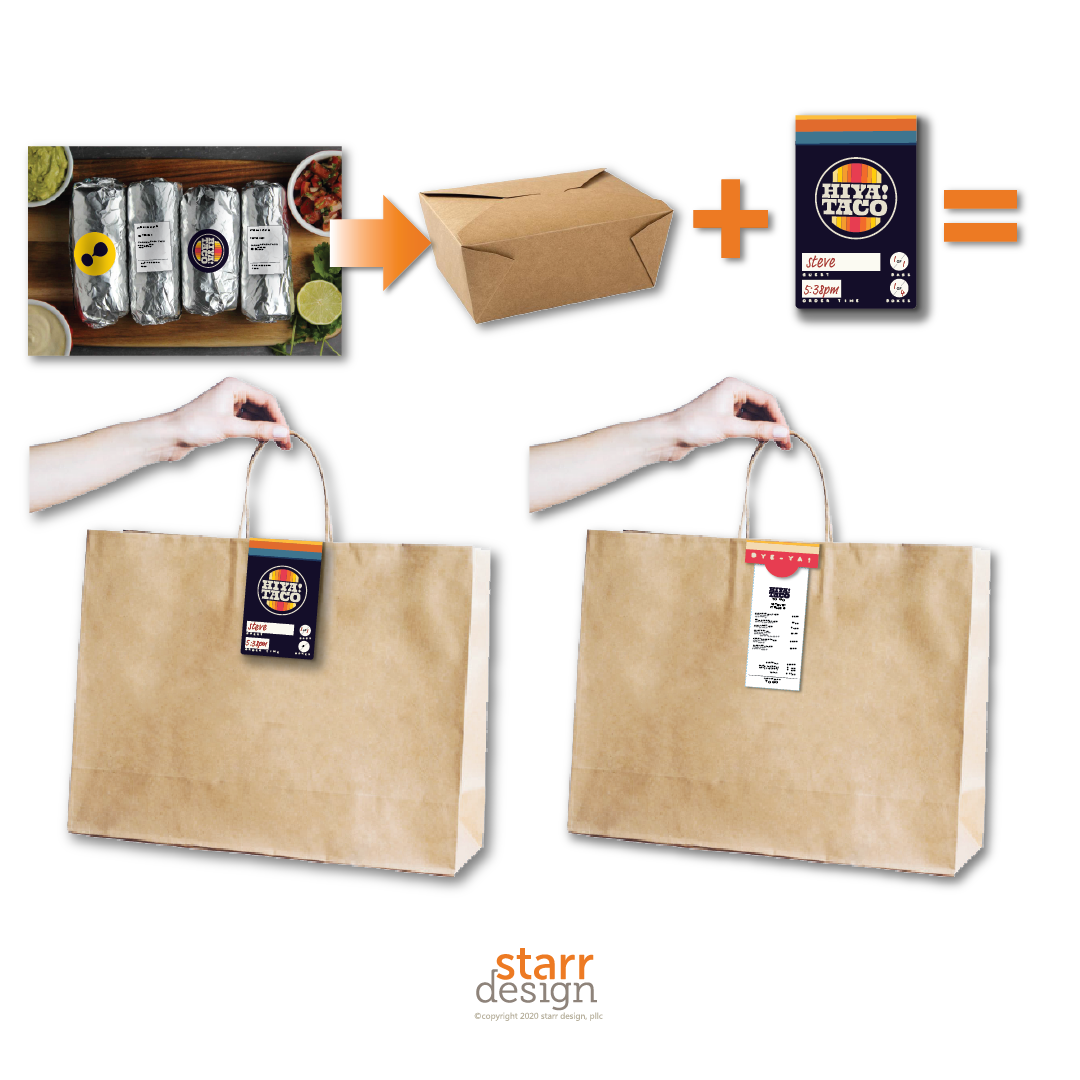
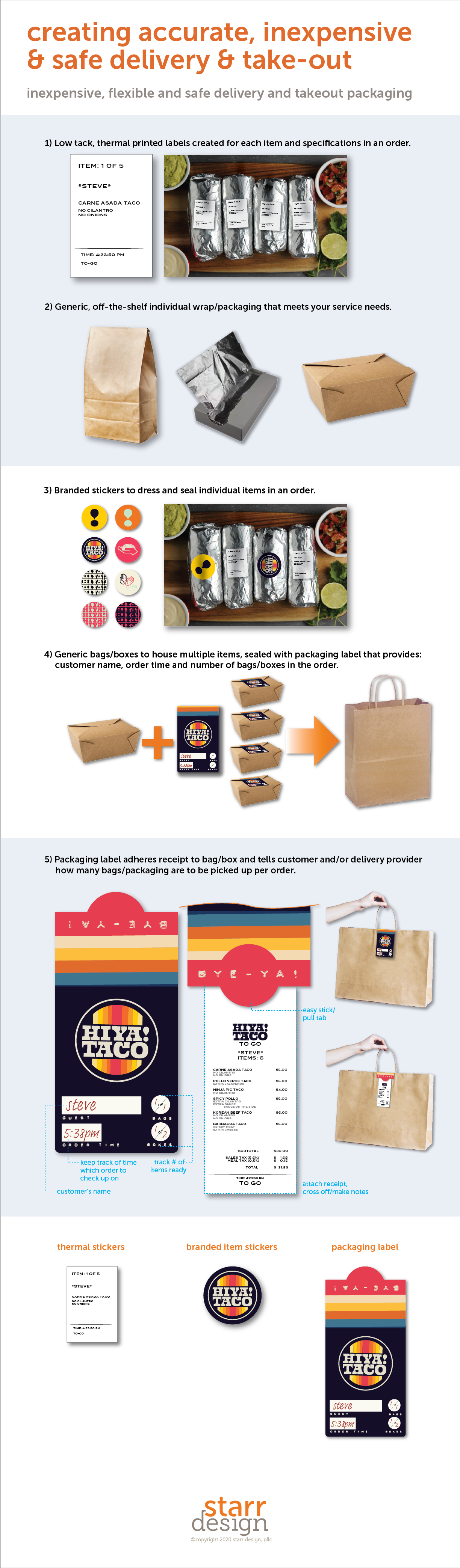
Although we recommend KDS monitors for the majority of the food production process, one or two good old-fashioned thermal printers - used to print individualized descriptions for each item onto a low tack label - is best for to-go orders. This label allows you to describe the specific item with any modifications and how one item may be part of a bigger order. These low tack labels go directly onto the item’s wrapping. You can use generic wrapping like foil, wax paper or butcher paper to save money and get up and running quickly, while printing branded stickers to “seal” the wrappers and give it your own look and feel.
These individual items can then be placed into generic to-go or carry-out packaging. That overall packaging is also sealed with a branded label that adheres the order receipt onto one of the bags and communicates the customer’s name, order time and number of bags/boxes that complete the order. This way, the customer or delivery provider knows exactly how many bags and/or boxes they should be leaving with, leaving nothing behind.
Flexible Branding
You want your takeout to look nice, allow your product to travel well and clearly communicate your brand, and you don’t have to spend thousands of dollars to do it. We recently worked with HIYA Taco, a new fusion taco concept out of Milwaukee, Wis., to implement this practical, inexpensive takeout and delivery model. The goal was to design something that reflects the taco shop’s That 70’s Show-inspired aesthetic while allowing the new concept to experiment and figure out what packaging best fits their menu items without having to invest in custom printed and produced packaging.
First, we opted for generic packaging. Whether it’s the small sheets of wax paper used to transfer each taco from station to station, foil wrapping around the to-go tacos, the cardboard box holding multiple tacos and salsa or sharables like their “taachos,” or the brown paper bag transporting the majority of the order together, it’s all off-the-shelf product that you can bulk order from just about anywhere. This versatility is critical for restaurants that are trying to figure out what products work best for various takeout items.
Then comes the actual brand expression. From logos and icons to taglines, you can easily create custom- printed labels and stickers that express your brand and make anything identifiable as your product. With HIYA, we used key icons and elements of the brand design to create stickers solely for branding on individual items, and the logo and tagline for labels that seal the larger packaging. Again, this prevents you from having to invest a lot of money on custom-printed, bulk ordered packaging, which is already more expensive, that might end up not even being a good fit for your menu items. These stickers and labels can easily be printed on any color laser printer for the couple of days it takes to get large quantities of custom-printed labels and stickers produced and delivered. This saves a lot of time and money compared to custom produced packaging.
Safety
One of the great things about this system is that it ensures safety during transport by communicating to the customer that everything is closed and sealed in the restaurant. Using stickers to seal individual items and packaging labels to close boxes or baggage both keeps the contents sealed and communicates to delivery drivers and customers that it has been sealed. That way, if that seal is ever broken, customers know something has happened after it left the restaurant. It’s an inexpensive way of evoking the taper-proof packaging that pharmaceutical companies developed after the Tylenol incident. We believe that this helps everyone feel more comfortable in these times when we’re all hyper-vigilant about who and how people touched our food.
Featured in Restaurant Development + Design.


COVID-19 Resources
Restrictions on restaurants and large gatherings due to COVID-19 have swept the nation with lay-offs, particularly within the restaurant, hospitality and service industries. Many restaurants have had to reduce to a skeleton staff, leaving business owners with difficult decisions and thousands of servers, hostesses, cooks and more without their main source of income.
In light of these circumstances, we’ve gathered a few resources that we hope can provide a little support and insight as we all weather these challenges:
show your support for someone in the service industry
what: Tip a local service industry worker each time you pour a glass at home.
how: Select your city and you’ll receive links to donate to an impacted service industry worker via Venmo or Cash App (if your city is not listed, be sure to fill out the form and help ServiceIndustry.tips expand there).
who: Impacted Service Industry workers – Find your city and fill out the form to be submitted to receive tips (we are counting on you to be honest!).
Restaurant Owners – share with your network and make sure your impacted workers know they can submit their information.
Everyone – Submit your tip and spread the word!
Huge thanks to Charlotte Agenda for sharing this platform that started in Chattanooga, TN and for supporting this concept throughout Charlotte.
financial crisis management tools
what: Free crisis management resources from Simple Numbers author Greg Crabtree to help navigate the current difficult economic circumstances.
how: Follow this link to access videos, templates and case studies (completely free).
who: Anyone looking for guidance on crisis cash flow planning.
launch an accurate, inexpensive & safe delivery & takeout system
what: Simple steps and key products that can help restaurants roll out an accurate takeout system that is low-cost, on-brand and can be implemented in a matter of days.
how: Read our guide here!
who: Restaurant owners or managers that want to launch, fine-tune or cut costs on takeout systems.
foodservice cleaning and hygiene in the age of COVID-19
what: Are you using the right cleaning techniques throughout your restaurant?
how: Find out here!
who: Restaurant owners or general managers who want to give their restaurant cleaning processes a "health check."
we are in this together.
How we're addressing COVID-19.

COVID-19 Response
Our sympathies go out to all of those impacted by COVID-19 – from those who have been diagnosed, friends and family of those who have been diagnosed, those whose jobs and schools have been impacted to so many more. We are feeling the impact together across the country and around the world. This is an unprecedented time for small and large businesses alike, but what’s not unprecedented is our ability to rally, respond, learn and end up stronger in the long run.
We want you to know we are still readily available to meet your needs. Here are the precautions we are taking to continue business as usual while trying to help “flatten the curve:”
social distancing : the hot topic
Time to give each other some space!
- We are reducing the number of people in the office by allowing employees to alternate between coming into the office and working from home (with full access and connectivity) on staggered days. We will continue to adjust in accordance with CDC guidelines.
- Rest assured, someone will be available during normal office hours every day. Direct lines can be found in employee email signatures. You can also dial our office (704-377-5200) to be connected to someone by name.
hygiene : the name of the game
In addition to our regular daily cleaning service providers, we are:
- Wiping down the office at the end of each day (some of us, multiple times a day) and hiring additional deep-clean services.
- Keeping hand sanitizer readily available for employees and delivery providers.
- Regularly using soap and warm water to wash hands.
- Asking staff with any symptoms to stay out of the office for the CDC recommended time periods.
I have even given in to running my coffee mug through the dishwasher every day. Something else unprecedented.
technology : the key to connectivity
Teamwork is at the core of our work at starrdesign. That said, we have been investing in innovative, collaborative technology over the past several years to properly equip and enable us to efficiently work remotely. Investments include:
- A premium-grade videoconferencing system in our conference room that is also accessed by everyone's personal computers. Our team will continue consistent communication via Microsoft Teams and BIM 360 technologies.
- Completely migrated shared files to the cloud for secure, all-encompassing team access.
- The last stage of our shift to complete virtual access taking place when our new timekeeping and billing system, Ajera, goes live on April 1st.
travel : the one taking the back seat
Due to the ever-evolving circumstances, we are limiting business-related travel to only what is absolutely necessary.
Our team is driven by the principle that we get better working together every day, and today is no different. We will continue to monitor the rapidly evolving situation around COVID-19 and take the necessary actions to prioritize the health of our team and the American community. In the meantime, friends, stay safe, stay clean and stay strong.
Best,
SaS
steve starr, ais, fcsi
chief and President
starrdesign, pllc

Designers Dish 2020!
Ever wish you could pull up a chair with a few crack restaurant designers over cocktails to chew the fat about what's in, what's out, what inspires them, how they handle tough client issues and what they see coming around the bend?
Steve joins other industry professional in serving up what they see in the restaurant design industry in 2020.
The original content of this post was written by Dana Tanyeri for Restaurant Development + Design magazine.

starrdesign named Best and Brightest Companies to Work For in the Nation for 2019
The designation was given by The National Association for Business Resources and honors 540 businesses across the U.S.
CHARLOTTE, N.C. (March 12, 2020) — The National Association for Business Resources (NABR) has named starrdesign as one of the Best and Brightest Companies To Work For in the Nation. The 2019 national winning companies were assessed by an independent research firm, which reviewed a number of key measures relative to other nationally recognized winners.
The Best and Brightest Program honored 540 national winning organizations from across the country out of 5,000 nominations.
“We are honored to be recognized by the NABR,” said starrdesign principal, Steve Starr. “This was a really tough year for our team on the personal level. Several of our team members went through some difficult life transitions and the entire team rallied around each individual. Receiving this honor is testament to the team’s resiliency and their commitment to making starrdesign the kind of place where each individual wants to work. It’s a business environment that fosters both personal and professional growth.”
starrdesign has a history of receiving top accolades for its professional environment, having earned the designation of “Best Places to Work” in Charlotte, N.C. for the past several years. In 2016, the company also received the Corporate Culture Award from SmartCEO magazine.
“The fact that we continue to thrive as a workplace for interior designers, architects, graphic designers and brand marketers is exciting and rewarding,” Starr said. “For that, we are truly grateful as we continue to provide the ‘best and brightest’ designs and innovations for our clients and partners.”
With over 20 years of experience conducting the Best and Brightest competitions, members of the NABR have identified numerous best Human Resource practices and provided benchmarking for companies that continue to be leaders in employment standards.
“With the war on talent hitting the door steps of the Best and Brightest, this achievement means even more than it did a year ago. As we continue to raise the bar, these companies rise to the challenge through cultural innovation, maximizing their workforce potential,” said Jennifer Kluge, President and CEO, Best and Brightest Programs.
The companies nationally recognized as a Best and Brightest Company to Work For® were featured in the February online edition of Corp! Magazine.
As seen in: Restaurant News
Decade of Disruption: Restaurant Insiders Dish What’s on the Plate
Modern Restaurant Management (MRM) magazine asked restaurant industry movers and shakers: "What do you feel is going to cause disruption in the restaurant industry over the next decade?" Their answers touched on a variety of subjects including AI, virtual reality, virtual kitchens, staffing and retention, social media marketing, sustainability and third-party delivery.
The original content of this post was written by the staff at Modern Restaurant Management magazine. Read the full MRM article here.

Mind Over Budget: Tricks and Tips for Keeping Costs Under Control
When it comes to keeping costs under control, there are several measures restaurant operators can take to ensure projects stay on task and on budget. In terms of construction, architecture and interior design, the way forward isn’t to cut corners. Rather, it’s to have a clear plan and then making decisions based on the costs.
The original content of this post was written by Valerie Killifer for RD+D. Read full RD+D article here.
more than a meal
A firsthand account from Steve on reaffirming starrdesign’s mission internationally and the magic that makes food more than just a physical necessity.
A recent, amazing trip to Israel reaffirmed what I believe to not only be the heartbeat behind starrdesign, but also a critical element of our society. We were on a short tour of the old port city of Jaffa, immediately adjacent to the new, technology-driven city of Tel Aviv. The young woman leading the tour showed clear dedication to cross-culturalism. It was fascinating to see this city uphold one ancient tradition in particular - Muslims, Jews, Christians and many other faiths all living and working together.
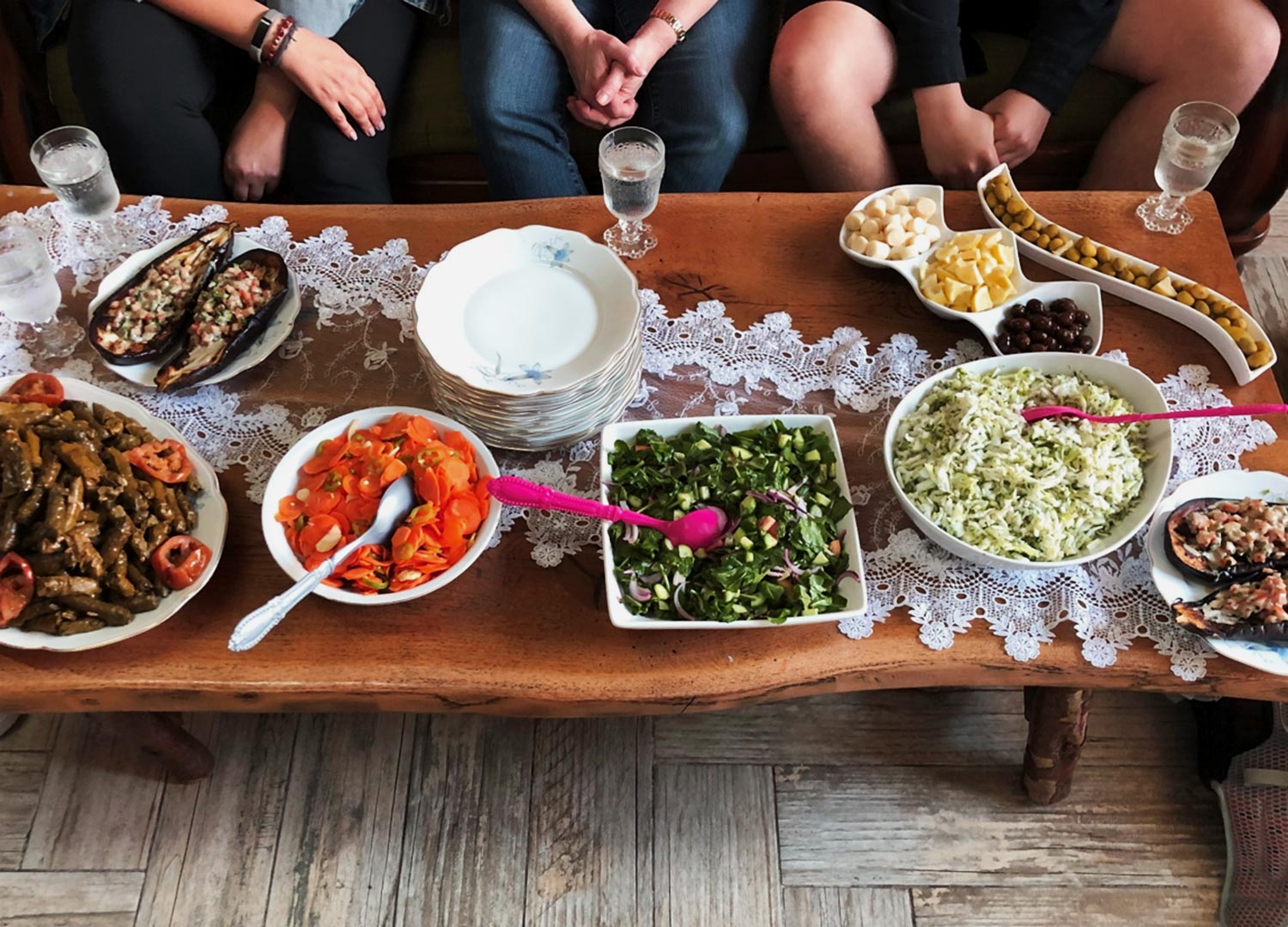
The tour ended with lunch in an Israeli Arab woman’s apartment; a one-hour highlight that will last a lifetime. Shirene and her two daughters welcomed us into their home for wonderful food they’d prepared and were exceptional hosts the entire time. While eating a classic Arabic meal that could easily have fed an army, we talked about Shirene’s life and experiences as an Israeli Arab woman.
The pivotal, affirming point came when one of our small group members asked Shirene why she opens her house to strangers and cooks for them. She explained that there aren’t a lot of options for Arab women to work in the Middle East, even in Israel, and she and her husband want to provide every opportunity for their two daughters to have the best in life. She also explained that she believes in the almost magical characteristic of sharing food with others to bring them together on a human level, regardless of their religious, social, economic, political or other cultural differences.
Wow.
Sitting across the globe, Shirene had reaffirmed why I believe starrdesign’s mission is so important in today’s society. Food and restaurants are unique in that they are, and always have been, focal points that encourage people to gather, socialize and connect at a personal level. We believe that by designing restaurants to reinforce social connection, we can begin to make a difference in our world. Shirene may be on track to bringing peace to the Middle East, and we might be able to help alleviate the ever-increasing feelings of loneliness and isolation in today’s society- all by connecting people over a great meal.

1 problem, 3 solutions: what are the best materials to use in kitchen flooring?
When it comes to kitchen flooring, there is no one perfect solution. There are three main types of floors that each have pros and cons. When stepping through the swinging doors that bring you behind the scenes of a restaurant, you’ll find the floor gets hit with a bit of everything that’s in the kitchen: hot grease, moisture, food byproduct residue, harsh cleaning chemicals and more. These are all environmental factors that restaurant designers, owners and manufacturers must consider when specifying a kitchen floor, along with the initial costs and required maintenance associated with each type of flooring. Here are the 3 best options:
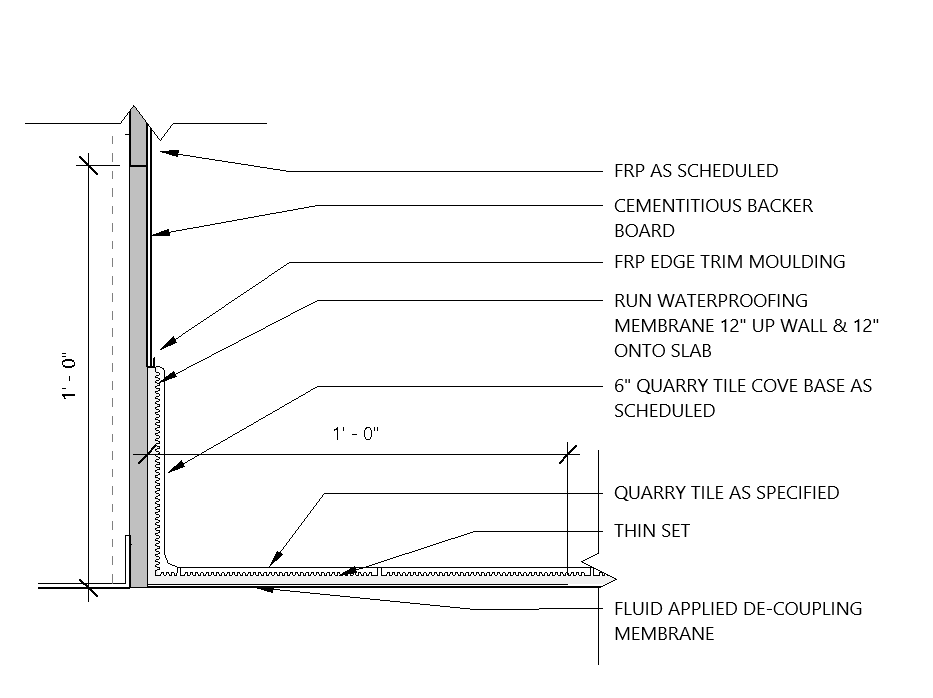
Quarry Tile. Quarry tiling is arguably the most well-known and certainly the oldest flooring option within the restaurant industry. The tile has been around for ages and is extremely durable, making it seemingly cost-effective. However, the devil is in the details. While all grout will inevitably break down, the type of grout you choose can slow that process. We always specify an industrial epoxy grout when using quarry tile – it is the least porous grout option, so moisture, chemicals and kitchen products are less likely to penetrate it or break it down (or do so at a much slower rate). Despite being the most durable grout option, it is very brittle and can crack if installed improperly. Epoxy grout can also be more challenging to install because of its quick dry time. The other key to quality quarry tile assembly is a waterproof, antifracture membrane to ensure that the assembly is completely waterproof and does not move with the concrete subflooring. Although installing the membrane adds an extra step and fee, it is critical in extending the life of your floor.
Polyvinyl Sheet. When done correctly, polyvinyl sheet can be the optimal choice for restaurant kitchen floors. It is typically a ¼ inch thick, hard, rubber, mat-like material that is rolled out directly onto the substrate, set with an adhesive and welded by heat or chemicals. These welds at the seams and the integral cove base essentially create a monolithic surface when installed correctly. The sheet material is nonporous, which makes it practically impenetrable and essentially chemical and byproduct resistant. The material is also usually made with recycled content and has antifatigue cushioning, making it ergonomic. This is particularly important in environments where you have employees working on their feet for long hours, such as a restaurant. Its elasticity allows it to move with the natural dynamics of the subfloor beneath it and makes it much less likely to crack than a less elastic option. However, it does have a very low heat tolerance and will melt if you place extremely hot kitchen equipment on it.
Although polyvinyl can be installed relatively quickly, the chemical welding must be done correctly to prevent breakdown and sheet separation. You also must ensure that the sheets are being applied to a concrete subfloor that has had adequate time to cure. If there is too much moisture in the concrete, it will continue trying to release that moisture and create a hydrostatic pressure that can cause the seams to split, the floor to bubble, and worse yet, mold to grow under the sheet vinyl.
Poured Resinous Urethane Flooring. There are many types of poured or troweled resinous floors on the market. While some are even touted as appropriate kitchen flooring (like methyl methacrylate and epoxy), urethane is by far the most appropriate resinous floor option for a commercial kitchen. Urethane flooring is a 100% monolithic, seamless flooring system that is extremely elastic. The material is poured directly onto the substrate and bonds to it without any adhesive (almost like a skin to the substrate). Its durability and elasticity make it less likely to crack from typical settlement or building movements, and it is chemical, moisture, heat and slip resistant. While you don’t have to worry about moisture emitting beneath the surface or grout-related issues, urethane flooring doesn’t have the cushion that polyvinyl has and can’t be spot-patched as easily as quarry tiling because you have to cut out a larger section.
No matter which of these three flooring options you choose, there are two additional factors to keep in mind: quality installation and proper maintenance. We discussed the many challenges with installation for each floor option, but each one also has a unique set of cleaning and maintenance requirements. The easiest way to get the most out of a commercial kitchen floor and ensure that it lasts as long as possible is to use the manufacturers’ recommended cleaning products and processes. I can’t count how many times I’ve seen a kitchen floor being improperly mopped and cleaned in my almost 30-year career. The cheapest or most caustic cleaner is rarely the best. Each of these flooring options requires a cleaner with a specific pH to ensure that grease is being removed without the flooring being chemically damaged. A clean water rinse and squeegee technique is also highly recommended after any industrial floor cleaner is used to ensure that you get all the grease and dirt off the floor and down the drains. These simple steps will help prolong the life of all three of these flooring options.
Featured on Restaurant Development + Design.
How to avoid unnecessarily costly construction
Why investing in your architect during the construction process could save you thousands
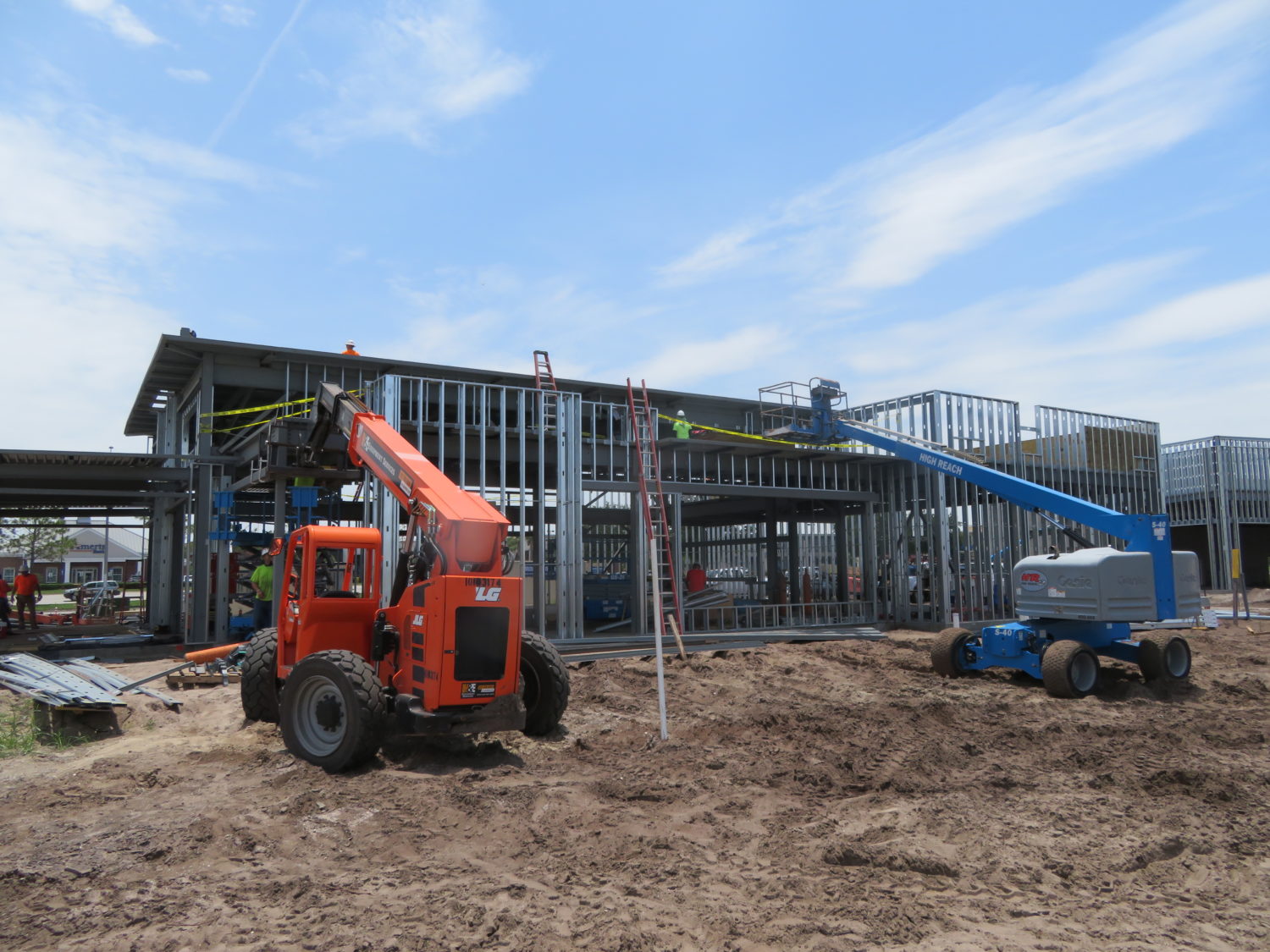
You’ve spent countless hours coordinating with your architect and designer to achieve carefully articulated drawings, and you’ve finally gotten the permit to begin construction. Ideally, you’ve had a discussion with your architect about who is going to make sure these plans come to life accurately, seamlessly and on-time before the project began. However, if you haven’t, it’s not too late. Here’s why you should have the conversation that puts construction administration in the architect’s hands and the architect’s eyes on your new development from the ground up.
They pay attention and can adapt the project
A design drawing is the intended building layout, but life happens. There are many factors or impediments that cause changes during construction, such as unexpected existing conditions and conflicts. This means that the fundamental makeup of your completed building may differ from the original design documents. However, the finished building’s skeleton can still be accurately reflected in an as-built drawing. These are drawings that the architect creates during construction to document and track any changes during the process. The design is updated “as the building is built” to reflect the most accurate depiction of the building’s construction versus its intended construction. These drawing updates also allow the project to be thoroughly re-coordinated as changes occur, rather than just addressing the singular change outside of its overall context.
When you’re ready to renovate seven to ten years down the road, having as-built documents will make that process easier and cheaper. You won’t have to pay an architect to come survey the entire space again. Even if you do, many of the changes tracked in as-builts are beneath the surface, making them very costly surprises once construction commences. Re-designing to accommodate for these surprises can take a considerable amount of time, and time is money during construction. The architects may have to redraw the changes (or simply note them), the revision may have to go through permitting again, and the sub-contractors could find other jobs if demobilized.
"time is money during construction."
This delay may sometimes take you from potentially beating your lease’s start date and earning revenue before you start paying rent to not starting on time and losing money once you start paying rent. Such losses, however, are avoidable by knowing what you’re going in to and planning accordingly based on your as-builts. Having an as-built can also financially benefit you by increasing the value of the facility if you go to sell it in the future. These documents can help take some of the guesswork out of the buyer’s due diligence process and thus increase the property’s potential value.
They keep you in check.
The architect may ask, “will you need a Certified Substantial Completion document signed?” Many landlords and lenders require tenants to have a signed Certified Substantial Completion and may not distribute their tenant improvement allowance without it. It’s important for an Owner or restauranteur to check their lease and/or loan documents to see if this requirement applies before construction begins, because it must be written and signed by the architect. The architect is verifying that the general contractor has does its job, which the architect can not claim unless they regularly visited the site. If the architect is responsible for the construction administration, they will already be visiting the site and can confirm that the job was done properly for no additional fee, as well as make sure that you know to check for this requirement.
Having an architect involved in construction administration can also save you from surprising, expensive change orders. Restauranteurs often visit emerging concept job sites to “check up on things.” This gives Contractors easy access to the Owner to ask in-the-moment questions. While it may sound convenient, it can often lead to costly change orders that the Owner didn’t realize were piling up. Then once construction is complete, the Contractors can come back and say “remember when you were on-site and agreed to this? Well, that change costs $100,000.” However, if the architect manages the change order and payment process, any change request is not valid unless it goes through the architect and gets signed off by the Owner.
They keep construction in check.
Another facet that often falls through the cracks when the architect is not kept involved is scheduling special inspections. Significant construction projects often require that a third-party vendor has a structural engineer sign off on proper installations. General contractors may say they can handle calling the inspectors in to scrutinize their work. This may not be your first rodeo with construction, and you may be confident in your ability to manage the process. Regardless, you both have other jobs to do and scheduling special inspections is often forgotten. This means you end up having to tear down completed construction to have certain parts inspected, which can cost several thousand dollars.
They keep your best interest in mind.
As a middleman between your vision and the execution of that vision, the architect is responsible for protecting your investment. Since they are the only ones that know the intricacies of how you want your space defined and the practical technicalities that are necessary to make it happen, they are equipped to ensure that what you think the space is going to look like is what is being built. Additionally, if the contractor says doing something differently will save money, but doesn’t know it will interfere with another design aspect that you expressed is important to you, the architect can step in and inform you of the decision you’ll need to consider. Being an intermediary also includes making sure you see the benefit from any savings promised.
At a bare minimum, you should be paying your architect to pay attention: creating as-builts, reminding you to check your lease, keeping an eye on the site, scheduling special inspections and making sure you know exactly what is being built.
You entrusted the architect with the details of your design. Entrust them with paying attention to the execution of those details as well.
Featured on Fast Casual.
1 problem, 3 solutions: QSR design challenges
With consumer trends changing and the fast-casual industry booming, it can be tough for quick service restaurants (QSR’s) to stay competitive. They’re expected to uphold their characteristic, high-speed production while now accommodating for the growth of mobile ordering and delivery. Then there’s the uphill battle against product quality perception when compared to their fast-casual counterparts, no matter how much they invest in high quality ingredients. The trick for QSR’s to overcome these obstacles and differentiate themselves in the market lies in strategically capitalizing on and taking advantage of design solutions that are already at their fingertips.

Line up – take the leap.
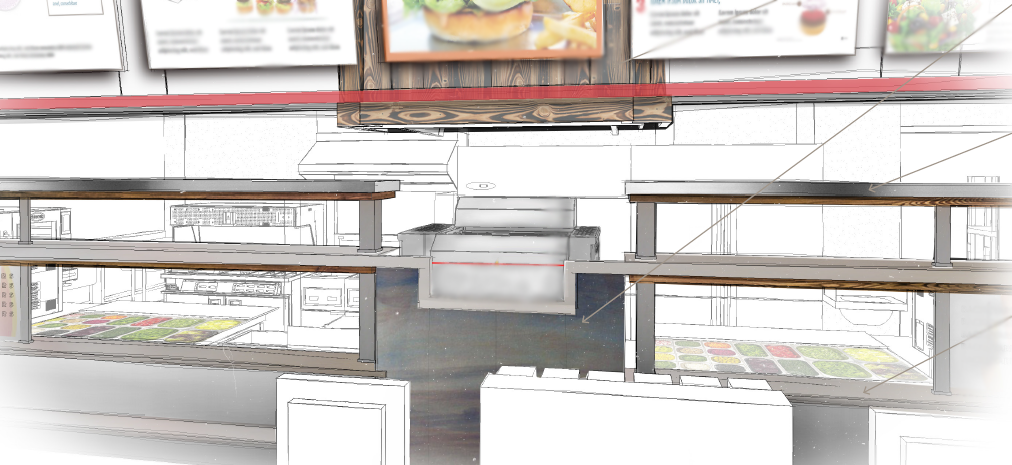
The increased popularity of delivery is no surprise or novelty. Now that third-party delivery services are in the picture, how do restaurants keep up? Considering QSR’s are better able to address delivery demand than any other restaurant category, many of them have already taken the leap to do so. A standard kitchen layout has a cook line that leads to a make-up/assembly line before it gets sent out to the floor or drive-thru. The most prudent concepts looking to satisfy walk-in, drive-thru and delivery demands are incorporating dual make-up/assemblylines and sometimes even dual cooklines. They designate one line for walk-in and delivery orders and the other line to accommodate drive-thru orders. Since QSR’s typically have a 60% drive-thru to 40% walk-in order ratio, the walk-in side has the bandwidth to help accommodate for delivery. The key to the second line, however, is making sure that you manage your labor to meet delivery needs. Many restaurants either don’t add the extra line or don’t manage their labor on the second line because of the additional capital and labor costs. Yes, adding a station increases both labor and capital costs. But the market and I are here to tell you now is the time to take the dual-line leap. You can quickly offset the costs if you manage up labor to meet the potential revenue you could be making with the added capacity. And if you don’t, someone else will. Worse yet, if you don’t and ticket times increase, service levels and customer satisfaction will fall and you’ll send your restaurant into a downward spiral of mediocre performance at best.
Focus on merchandising, efficiency and taking advantage of new cooking and holding technologies.
It’s inherent that potential customers perceive fast casual dining as higher quality than QSR’s. Even if a QSR invests in more expensive, higher-quality ingredients, this predisposed perception is often so strong that it can hamstring you against the fast-casual competition. The key here is changing the way you serve your product and how the consumer experiences it. Celebrate “hero items” through how you display/merchandise or better yet, cook/prepare them – from putting homestyle sides in homestyle serving vessels to sprucing up the condiment station for sweetening and creaming your coffee. Going above and beyond in displays to create “food theatre” that emphasizes and merchandizes certain items creates a positive impression around the products and overall brand quality. At the same time, you must positively impact the consumer experience with utmost efficiency. This means exceptional operations that lead to getting the quality product to the consumer in a timely, hospitable manner. It cannot be just “food theatre” or efficiency, it has to be both.
Cooking and holding advancements
QSR’s also need to stay up-to-date on the many advancements being made in cooking and holding technologies, and should be looking to take advantage of them every chance they get. A cook-chill-retherm process, for example, prevents food from stewing, overcooking and degrading as it sits in a steamtable. Instead, the food is cooked in water or steam just until done, chilled and quickly seared upon order so that it doesn’t sit and overcook or dry out. Similar advancements include holding technologies that allow you to pay very close attention to and precisely control heat and humidity to keep food warm for longer periods of time without changing the texture. From choosing between radiant and convection heat to controlling humidity, moisture or air flow, there are incredible technologies out there – QSR’s have to be open and willing to try them. There are also some amazing technologies associated with fast, automated cooking processes. High-efficiency charbroilers, for example, maintain consistency and quality without having to rely so heavily on the cooking staff.
Look for ways that technology can improve the customer experience though increasing person to person relations.
So, you’ve incorporated technology to improve your back-of-house operations and production, now it’s time to focus on your guest again. Don’t fall into the trap that replaces people with technology. Human interaction is a biological necessity and proves to enhance customer experience. Try to find ways for advancements in technology to facilitate this connection rather than replace it. For some QSR’s, this has looked like using tablets to “line bust” drive-thrus during peak times. They bring hospitable service directly to car windows, thus taking more orders and getting more cars through the line at an increased rate. Despite using a device that typically detracts from human interaction, the tablet facilitates the person-to-person interaction by bringing an additional face and service directly to the customer.
Featured on Restaurant Development + Design.

StarrDesign, Brain Storm Shelter Restaurants partner to Launch Entertainment Complexes
Design firm assists Brainstorm Shelter Restaurants in clarifying and enhancing the Twisted Root and Truck Yard brands to increase value and make them more scalable.
Charlotte, NC (Restaurant News Release) starrdesign, the design and architecture firm behind Pronto by Giada, Firebirds Wood Fired Grill, Original ChopShop, and more, has begun redesigning and further developing the Twisted Root and Truck Yard brands with Dallas-based Brain Storm Shelter Restaurants.
The original content of this post was featured on Restaurant News Release. Read full Restaurant News Release article here.