Wing Zone is looking to remove people from its kitchens.
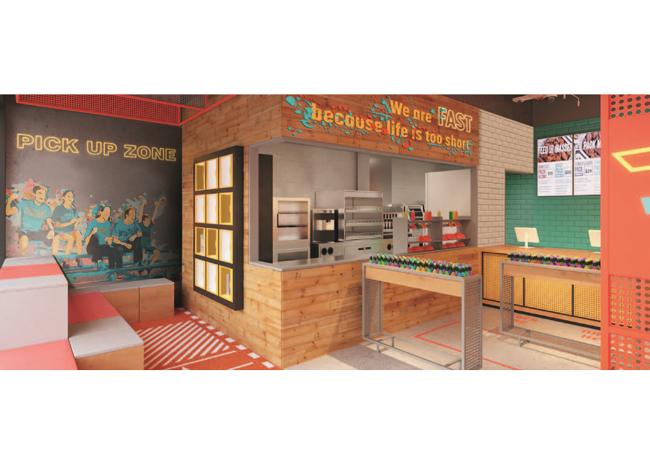
The Las Vegas-based brand has recently implemented a company-wide rebranding, which included overhauling its kitchen design, technology, and AI to improve both operations and the customer experience.
With a labor shortage that’s leaving restaurants struggling and a pandemic that devastated the hospitality industry, restaurants are doing everything they can to design kitchens that are efficient and effective.
The pandemic and labor shortage have changed the dynamic in restaurant kitchens, says Steve Starr, president and chief at starrdesign in Charlotte, N.C. “We’re looking at doing more volume with less people.”
Bring in the Robots
Wing Zone is testing using robots, starting with its fryers. “Having someone run your fryer is not a high-skill job. It’s hot and dangerous and greasy, so having a robot run it makes sense,’ says David Bloom, chief development and operations officer. “We’re developing a fully robotic fry system that cooks the fries, dumps them, shakes them and keeps them hot so employees can focus on taking care of guests.”
Wing Zone is also testing the addition of cameras with integrated AI software. It has placed them over expediting stations to make sure the right food goes into the right packages. This is especially important, Bloom explains, “because so much is consumed off-premises, and if it’s wrong, [customers] end up having a terrible consumer experience that’s really hard to fix.”
Cameras were also placed over the grills and the sandwich-making areas. The AI software understands the standard operating procedures, knows exactly how each food order should be made and what should be in every bag leaving the restaurants. “They know if there’s an error,” Bloom says. “They can flag or flash if something is wrong.”
The cameras can also help with employee training. If something is made incorrectly, the software will point it out and the employee can be retrained.
“By ensuring we make all of our food correctly and package it correctly, we’re able to avoid stopping the operation to go back and fix mistakes, which can be very disruptive and cause all types of backups and is very labor inefficient,” says Bloom.
“This makes everyone’s job easier and better,” he adds. “And, the customer experience is better, too.”